16th April 2026
Another visit to Parliament to share research findings
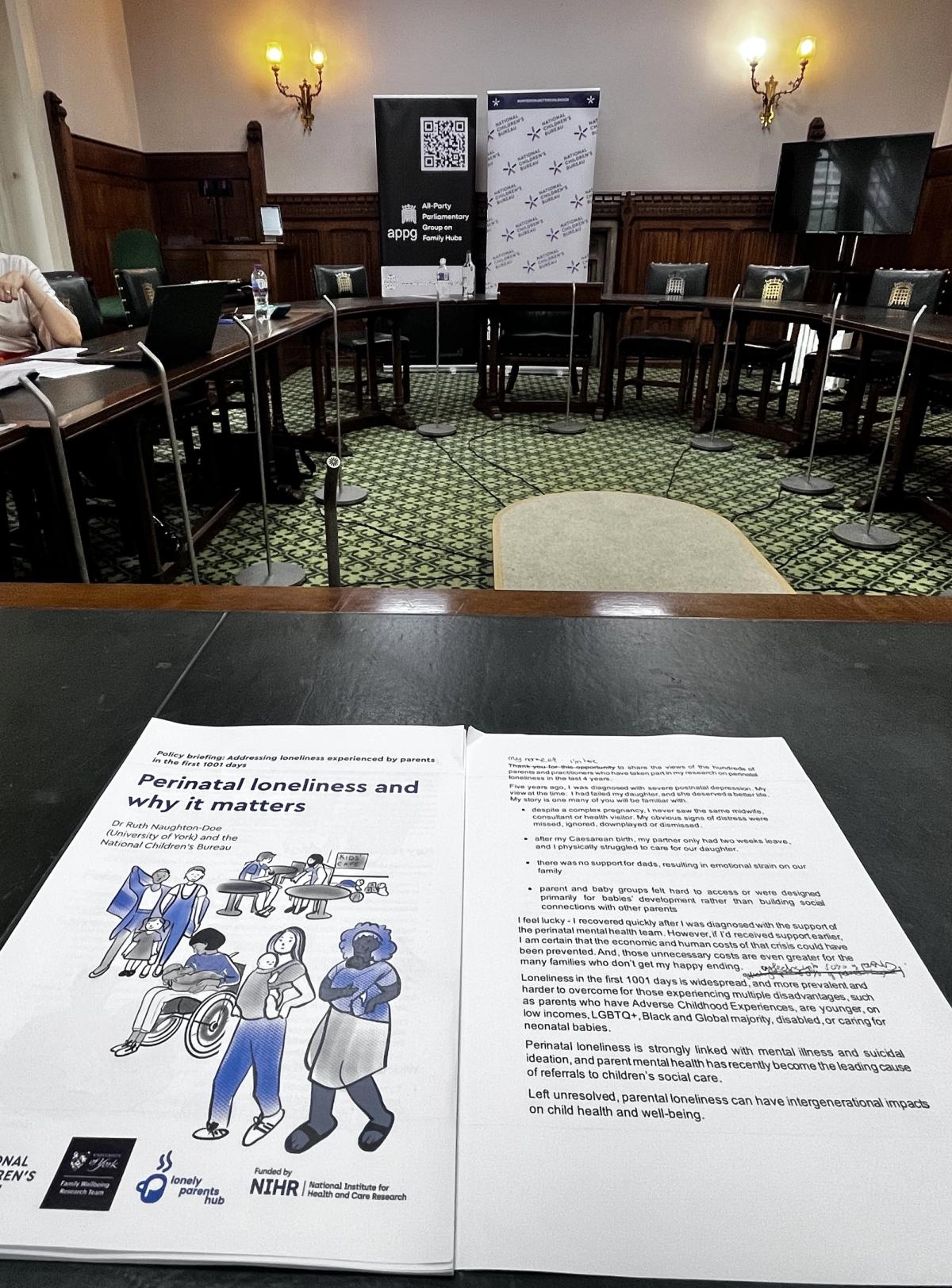
On April 15th, Ruth Naughton-Doe, presented my research on solutions for perinatal loneliness in Parliament. Thank you to everyone who has supported this research and the National Children's Bureau, who collaborated on the policy brief.
Here is what she said:
Five years ago, I was diagnosed with severe postnatal depression. My view at the time: I had failed my daughter, and she deserved a better life. My story is one many of you will be familiar with.
-despite a complex pregnancy, I never saw the same midwife, consultant or health visitor. My obvious signs of distress were missed, ignored, downplayed or dismissed.
-after my Caesarean birth, my partner only had two weeks leave, and I physically struggled to care for our daughter.
-there was no support for dads, resulting in emotional strain on our family
-parent and baby groups felt hard to access or were designed primarily for babies’ development rather than building social connections with other parents
I feel lucky - I recovered quickly after I was diagnosed with the support of the perinatal mental health team.
However, if I’d received support earlier, I am certain that the economic and human costs of that crisis could have been prevented. Those unnecessary costs are even greater for the many families who don’t get my happy ending.
Loneliness in the first 1001 days is widespread and research shows it is more prevalent and harder to overcome for those experiencing multiple disadvantages, such as parents who have Adverse Childhood Experiences, are younger, on low incomes, LGBTQ+, Black and Global majority, disabled, or caring for neonatal babies.
Perinatal loneliness is strongly linked with mental illness and suicidal ideation, and parent mental health has recently become the leading cause of referrals to children’s social care.
Left unresolved, parental loneliness can have intergenerational impacts on child health and well-being.
Parents tell me they feel like they are failing. But they are not failing, they are being failed. Parenting can be hard, but without connection and support, it can feel impossible.
The good news, often loneliness and costly perinatal mental health problems are preventable.
We recommend:
Well-funded health visiting and midwifery teams, giving practitioners time to identify loneliness and mental illness
Universal, accessible local support provided through Family Hubs and voluntary sector services with sustainable, long-term funding to allow them to thrive, rather than fight to survive.
Inclusive support that focuses specifically on social connection, tailored to the wonderfully diverse needs of parents in England
And we need longer, better‑paid parental leave for dads and non‑birthing parents, to support parent-infant relationships, and whole family wellbeing
To deliver the Best Start in Life, we need a healthier Early Years eco-system. Doing the best for our children starts with doing better for their parents.